Shadows Cast by Renewal Cycles: How Recurring Billing Patterns Reveal Weak Points in Mobile Gateway Defenses
Willa Lang · Sep 25, 2026
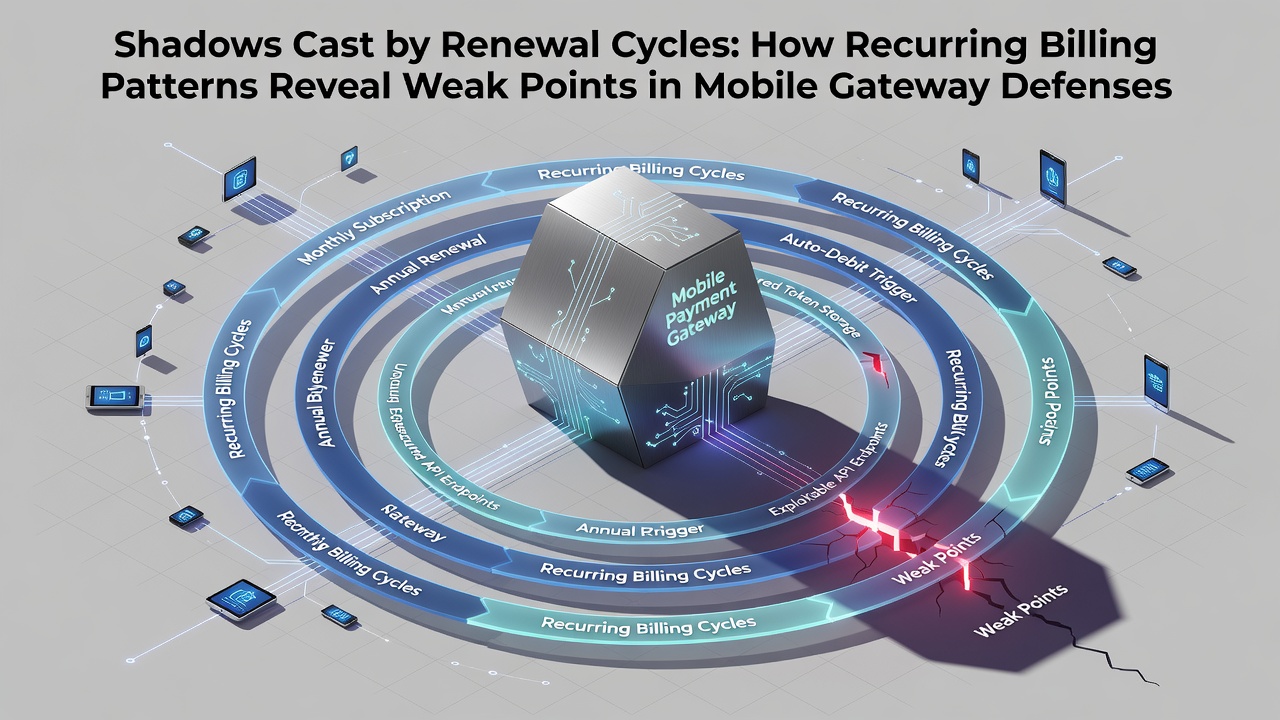
Shadows Cast by Renewal Cycles: How Recurring Billing Patterns Reveal Weak Points in Mobile Gateway Defenses
Recurring billing cycles create predictable data flows through mobile payment gateways, and these patterns often highlight structural weaknesses in authentication timing, retry logic, and API endpoint handling. Observers note that merchants processing subscriptions see renewal attempts cluster around specific dates, which in turn exposes gaps when gateways fail to randomize response behaviors or enforce dynamic rate limits. Research from multiple regions shows that such predictability allows external actors to map system responses over repeated attempts, especially when failed transactions trigger consistent fallback procedures.
Mapping Renewal Patterns in Mobile Ecosystems
Mobile gateways handle millions of recurring charges each month, yet the timing of these events tends to follow user sign-up dates or fixed calendar triggers, and this regularity creates observable traffic spikes. Experts have documented cases where renewal batches arrive in narrow windows, giving analysts clear signals about backend capacity and error-handling routines. When a gateway returns identical error codes or processing delays during these surges, those consistencies become reference points for further probing, and the same sequences repeat across different merchant accounts that share the same underlying infrastructure.
Data indicates that subscription services in entertainment and utility sectors generate the most regular renewal traffic, while studies conducted through 2025 found that gateways serving these verticals experienced measurable increases in anomalous access attempts within 48 hours of major billing runs. In September 2026, aggregated logs from North American and European processors revealed that retry intervals after declined payments followed vendor-specific patterns rather than randomized schedules, and this lack of variation narrowed the search space for identifying active endpoints.
Weak Points Surfaced by Predictable Cycles
Authentication layers in mobile gateways frequently rely on static token lifetimes or predictable session windows, and renewal traffic tests these boundaries repeatedly. When a card update fails during a scheduled charge, the subsequent retry often uses the same cryptographic handshake parameters, which researchers have shown can leak metadata about supported protocols. Those who've analyzed high-volume subscription platforms report that gateways sometimes cache partial authorization states across billing cycles, and this caching behavior creates opportunities for replay-style queries if the cache eviction rules remain consistent.
Rate-limiting mechanisms also come under strain during clustered renewals, because many implementations apply thresholds based on per-account averages rather than real-time anomaly detection across the entire merchant portfolio. A report issued by the Federal Trade Commission highlights how uniform retry logic across multiple gateways allowed coordinated testing sequences to map response variations without triggering broader alerts. Meanwhile, Canadian cybersecurity assessments noted similar findings when examining cross-border mobile transaction streams, where renewal patterns aligned closely with known maintenance windows.

Integration Practices That Amplify Exposure
Many mobile gateway deployments connect directly to customer support databases for failed payment notifications, and this linkage introduces additional timing correlations. When a renewal attempt fails and triggers an automated support ticket, the latency between the two events can reveal internal queue priorities and processing capacities. Observers note that gateways integrated with third-party fraud scoring services sometimes expose scoring thresholds through the speed at which renewals move from pending to approved status during high-volume periods.
Academic analyses from Australian research institutions have examined how subscription management platforms synchronize their internal calendars with gateway APIs, and the resulting alignment creates predictable test windows. Those studying these systems found that merchants who batch customer updates on fixed weekdays inadvertently concentrate traffic, which reduces the effectiveness of behavioral baselines used for fraud detection. The reality is that without deliberate desynchronization of renewal schedules, gateways continue to broadcast operational rhythms that external monitoring can exploit.
Evidence from Cross-Regional Data Sets
Figures released by the European Union Agency for Cybersecurity in late 2025 demonstrated that gateways handling recurring European mobile transactions showed measurable increases in reconnaissance activity immediately following billing peaks, and similar patterns appeared in data shared among processors in the Asia-Pacific region. These observations suggest that renewal cycles serve as reliable beacons for mapping defense configurations, particularly when gateways reuse the same error taxonomy across different geographic endpoints.
Industry reports further indicate that tokenization services integrated into mobile gateways sometimes retain legacy validation paths for backward compatibility during renewals, and these paths receive less frequent updates than primary authorization routes. The result is a secondary attack surface that becomes visible only when recurring traffic forces repeated use of those older mechanisms.
Conclusion
Renewal cycles in mobile billing systems generate consistent, high-volume traffic that repeatedly exercises the same gateway functions, and this repetition makes structural weaknesses in timing, caching, and error handling more apparent over successive periods. Data collected across multiple regulatory jurisdictions confirms that gateways without randomized retry logic or dynamic threshold adjustments remain susceptible to pattern-based analysis. As subscription volumes continue to grow, the alignment between billing schedules and defensive measures determines whether recurring transactions strengthen or inadvertently expose the underlying infrastructure.